
Student Autonomy in the Studio
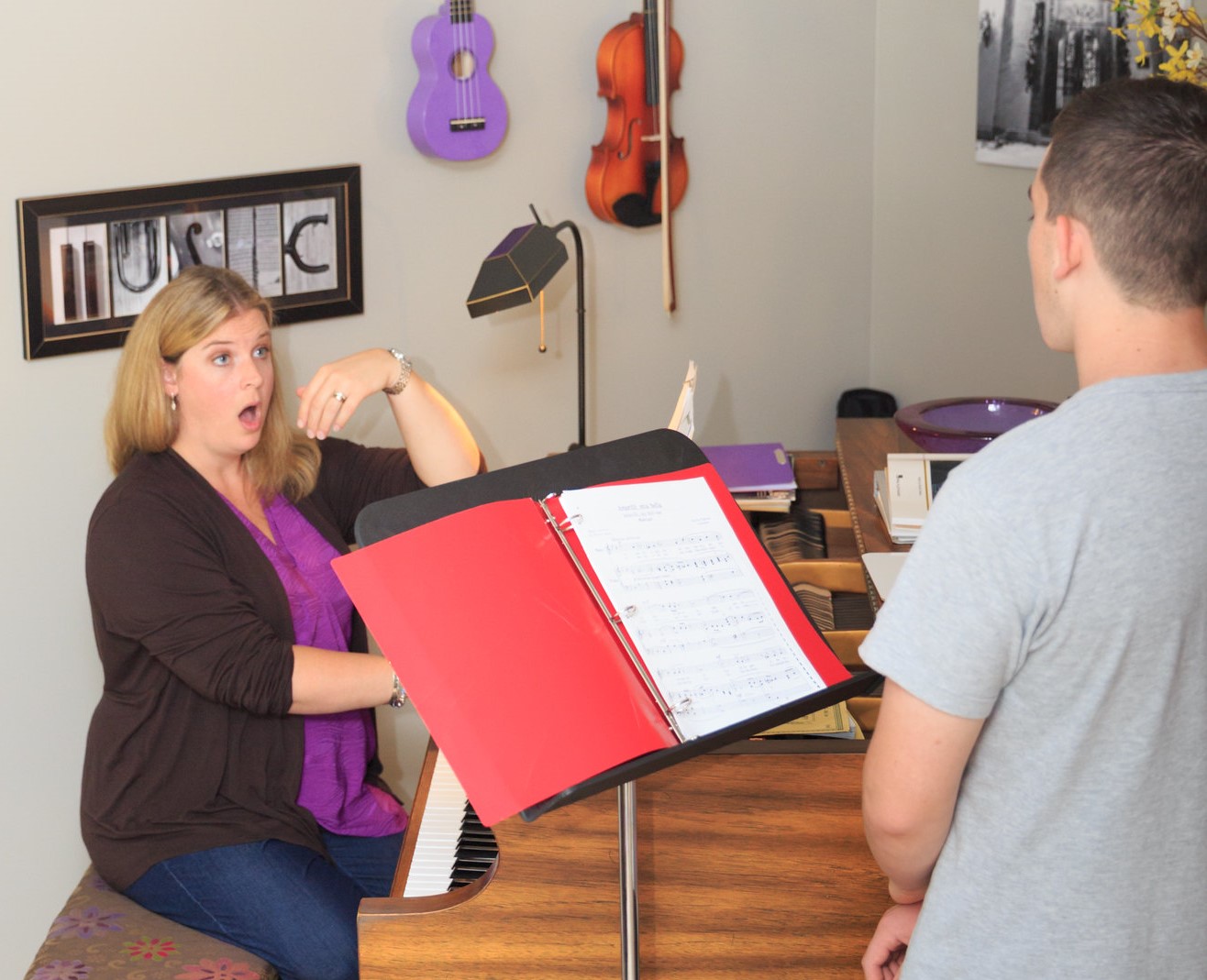
Student autonomy should have a place in the independent studio learning environment. Students come to lessons because they have skills they want to hone, questions they need answered, and things they want to master. Students also come to lessons “not knowing what they don’t know.” So, there has to be flexibility in the lessons structures and plans to grow with the students. And they should feel the freedom to change directions slightly as their progress dictates.
At Bella Musica, students definitely have autonomy. Here are the main ways we practice this in the studio.
Repertoire Choice/Style Choice
If you don’t like something, you aren’t going to spend any resources on it. You won’t spend time or money or energy on something you don’t value. Same holds true for music study. If you really don’t like 20th-century art song, for example, you probably won’t practice it. You might, if you see the pedagogical value or understand the rationale for doing it, but you won’t enjoy it.
Students who choose their own repertoire or have some say in the style of music they are learning will have more fun practicing it. And because it’s fun, they will practice more and as a result, will probably make more progress.
I am happy to suggest songs to work on, and often do, as a part of the learning process and to expose students to music they don’t know. It’s part of my job as a teacher! However, I am never offended if a student has other suggestions and/or just doesn’t like something. There is so much music out there! There isn’t just one song that will teach a concept – there are many. For singers, the 24 (or 26 or 28 – whatever your edition) Italian Songs & Arias are not the only way to learn classical, head-voice dominant singing techniques. There are modern songs that work this too! Bach is not the only study in key signatures, scales, and fingering techniques for pianists. He’s a great one, just not the only one!
As a teacher, it’s my job to meet the students where they are. Teach what they are asking to learn and other necessary bits along they way, through songs they are interested in and that speak to them as an artist.
Primary Focus of Lessons
There are so many directions a lesson can go. That’s what makes my job so interesting!
Music Theory & History – Some students really want to learn the language of music and want to glean a really solid music theory foundation. Learning the language and the history really interests them and helps them put together the big picture of how music has evolved. It helps them gain musical independence as well. If they can read it, they can learn it. If they have a working knowledge of the history and context, they can add depth to their performance. Music theory and history are necessary at the most basic level, but some students like a deeper dive. I’m here for that! I’m a bit of a music theory geek, too!
Technique – Some students already speak the language, but lack the technical skills to execute their knowledge. These students may spend their whole lesson on technical drills to hone their singing and playing skills. Some students spend a significant amount of time in the technical skills area because they recognize that they have some habits that aren’t serving them well. Good technique may become a focus of lessons for a while, as we discover together that some fundamental things are missing, weren’t learned yet, or just could be better. Technique is important for longevity. If you want to sing and play for life, it’s best to be sure the way you are using your instrument is sustainable.
Artistry – Often lessons morph into more of a coaching session. Knowledge and technique are working well together, but students want some guidance on communicating with their audience. Sometimes students just need a safe place and a sensitive observer to try things out on and experiment with their craft. I love being that for them! Trying things out, leads to awesome discoveries. Doing this kind of work with a coach can help students refine artistic choices and affirm them. This gives them the confidence and motivation to keep going with this work.
Performance Participation
To perform or not to perform, that is the question. Students always have the right to refuse a performance opportunity in my studio. If we are doing the good work we have already mentioned, there is usually excitement surrounding performance. Students have a desire to share their artistry with others. Students also know the value of performing for others and how vital it is to building their confidence in general.
However, sometimes there are parts of their artistry that feel incomplete or any number of other factors that make them feel they aren’t ready. And that’s okay too. Sometimes it is the type of performance opportunity that determines their interest. The studio tries to provide a variety for this reason. Students can participate in group learning sessions, formal recitals both at the studio and other venues, studio-produced video performances, audition & competition options, and open mic nights in off-site, casual venues. There are several studio-sponsored and third-party opportunities available annually for students to participate in and/or attend as an audience member. They are encouraged to participate to whatever level they are comfortable.
I will never pressure someone to perform. I will encourage them to when I think they are ready. But I will never pressure someone to have a negative performance experience. It may not even match their goals! That’s why it is always important to revisit these. If their current number-one goals is learning chord progressions, syncopated rhythms, and more about Baroque music, a performance would be unnecessary to achieving this goal. But, if their number-one goal is confidence, then participating in a performance opportunity would be a very relevant piece of the lesson plan for this goal.
Learning Pace
The learning pace is up to the student. I can guide and provide tools, tips, and timelines to help them keep the pace they would like to. But, otherwise it’s their choice. They can come to a consistent weekly lesson or just do drop-ins – either is fine with me! If students have a deadline like an audition or self-imposed accomplished-by-date, I can guide them through creating steps to get there. They do need to execute the plan and keep up with the pace. And if the pace we set needs adjusted along the way (either slow down or speed up), we adjust it! Learning pace is very individualized. It’s my job to encourage and present healthy challenges – not to pressure or set universal standards that don’t work for everyone.
Ultimately, autonomy at Bella Musica is about honoring each student as a whole musician and individual. By allowing students to help shape their repertoire, lesson focus, performance participation, and learning pace, the studio becomes a collaborative space where curiosity, ownership, and growth thrive. My role is to guide, support, and challenge students in ways that align with their goals, interests, and readiness—while remaining flexible as those evolve. When students feel heard and empowered in their learning, they are more engaged, more confident, and better equipped to build a sustainable, joyful relationship with music that can last a lifetime.
NOT TAKING LESSONS YET?
BECOME A MEMBER
If you are interested in voice or piano lessons and are ready to find out all the details. Hope on over to our Memberships page and choose the one that fits you! And if you aren’t sure what you need, let’s figure it out!